Search This Blog

September 3, 2012

Untitled

The first problem I encountered of writing this post was that I thought that it will be impossible! To explain something that I am not good at really bothered me. I can't seem to find what I am looking for and could not deliver the message.

That IS my problem. I am not good in personal management. I am not good in handling stress, meeting datelines, organising works, searching for solutions and all these are building pressure on my head... 

Have you ever met this kinds of situations too? If your answer is no, that means either you are a really organised and well planned person or you are lying to yourself...

Obviously, if I could manage what I know and plan on what I can do, things will get simpler for me. I could reduce energy and time consumption and increase productivity, get more jobs done in a day.

Sometimes I face problems that i cannot resolve on my own. For example, in writing a report regarding a Knowledge Management software application used by an organization, I need to give out questionnaires to understand how the KM application is effective in its purpose. So I need to network with an employee with that organization to distribute my questionnaires and get the report done. Failing to do so will be costly for me.

Thank God for technology! (also thanks to all the people who work in the field). Nowadays, it is so easy to store files and documents and disseminate and distribute them and reuse them again.. The best part is it is so easy to find the stuff you want in matter of seconds! 

There are so many many tools that I can find to make my life easier. All I need to figure out is how to make use of them in the best of ways. We have all this social networking sites, search engines, cloud data storage and many more applications that we often 'mislooked' that we can manipulate (or help facilitate) to get our jobs done, instead of decreasing our performance, but increase it instead. Right?!

Having realized this, I shouldn't be feeling burdened to write this post in the first place. It is all about personal management or more percisely, Personal Knowledge Management.

The key to leveraging my performance in getting my work done is by managing everything that I know and placing the right pieces on to the right puzzle.

Don't let your dilemmas overwhelm you! Personal KM is not that hard. It makes your life easier - much easier!

Allow me to share with you a song clip that describe failure in Personal KM. Well, it is actually a love song but always too often people who are in love forget to be manageable...(hope I'm wrong)

*Disclaimer: I do not own the copyright of this clip

Really bad, huh? Don't let that happen to you! 

Personal KM does not only help you, it helps you to help others as well. Even to a larger context -the society and the country as well. Your plans today might trigger a response in the future. Your perspiration today might be an inspiration for others tomorrow!


Thank you for your wonderul time to read.

August 9, 2012

Knowledge Management Enablers

Disclaimer: I do not own the copyright of the clip. 


The sharing of knowledge is really important. It is not just a matter of you acquiring knowledge, instead, equally important, your contribution of sharing YOUR knowledge.

Ever heard of the quote "It Begins with You"? It is pretty much true. I cannot say that I have accomplished many successes or I am the rightful person to tell you that you need to change, but history itself explains that successful leaders are the ones who share their knowledge.

Okay, to change the world might be a little over-exaggerating, what I would like to point on is self-development. You probably have gone through a lot of motivation sessions or team dynamics events or your school campaign about leadership and all, so by explaining about self-development here, it's going to be tremendously painful to write and to read..won't it?

What I want to share here is a picture of my understanding of Knowledge Management Enablers, which I learned in Mdm Azmawati's class and how these enablers are optimized for the knowledge management field.

Basically, we have three enablers, namely:

  • Culture
  • Technology
  • Infrastructure

Km_enablers

Let's dive in the scopes...


Culture

Upon Knowledge Management's interests, culture associates with the organization's norms. This explains about the behaviour inside the organization.

Are people willing to share what they know? Why?

Do they learn from their mistakes? How?

Do they reflect? How?

Do they give recognition for knowledge creation? How? 

The optimum or ideal culture of an organization is to create an environment where people appreciate the value of knowledge attributes alongside where people are motivated to make effort in generating and extracting knowledge and might as well use technology to implement the knowledge. 

The main reasons that this is not happening are due to complacency, apathy, lack of awareness, lack of understanding or proof of their value, or technology in the organization is not yet being up to the mark.

This is where YOU come to play the important role. You yourself ARE an enabler, because you belong in the organization. You must understand that this is your choice. You choose to be part of the organization.

So share, and believe what others share, no matter how little or small in significance the subject might be. Be prepared to lead and be led. The mutual understanding is a GREAT asset as collaborative efforts make projects run much easier and more successful. You might find giving rewards and remunerations give huge boosts to the performance of people. 

I would like to share a success story from Lafarge in Langkawi, Malaysia:

"In Lafarge, the Langkawi story is the most important example of a “postmortem”. A cement plant in Malaysia wanted to increase its use of petrol coke, a efficient energy that can be used by cement kilns. The technical director it was facing some challenges with the build up of residue in the kiln as a result of burning petcoke. 

 Using the technical centres and the knowledge sharing databases he discovered that a best practices developed by another cement plant. An experience exchange was organized and the two plants with the help of the technical centre collaborated on the implementation of the solution. The learning curve was sped up thanks to this exchange of knowledge. In 2001, petrol coke was used at 32% by the Langkawi plant. One year later it was used at 80% by the same plant, reducing the energy costs and increasing the returns in a shorter period of time."

*source: http://www.nickmilton.com/search/label/success%20story - KM success story #44


Technology

Technology is a really HUGE enabler of Knowledge Management. It relates to enabling the platform which Knowledge Management initiatives are built. Technology helps to extend the reach of knowledge and accelerates the transfer of knowledge.

It also promotes sharing and excellent in assisting to get the right information to the right person at the right time!

However, an organization might find that having an excentric focus or overdependency on technology would not be a good approach because that is the common pitfall in Knowledge Management. Of course, if you have the most advanced high-tech sophisticated technology, but no one bothers to use it, it is as good as nothing!

So it falls down again to culture. What the organization might wants to focus is on how to create an awareness and convenience for the people to use the available or developed wonderful technology facilities.

Having a great technology which everybody finds so useful and practical to facilitate data and information distribution and transmission is a bang for an organization. On the other hand, however, no matter how great the tech is, nothing of its sort could substitute the rich interactivity, communication, and learning that is inherent in dialogue.

This is because knowledge is primarily created by the interactions of minds. It is known that human intervention is the sole resource of knowledge generation. 

From Mdm Azmawati's slides:

Guidelines to implement technology:

  • Understand the business purpose
  • Determine whether the current technology can be adapted
  • Identify internal support requirements for maintenance of the system
  • Organize your content
  • Design for ease of use
  • Consider initial costs

Websites that provide services such as eBay, Facebook, twitter, etc. are common examples of technology enablers for knowledge. As these sites become more common and general in use over time, these services will change from technology knowledge enablers, to infrastructure knowledge enablers.

For example, 20 years ago, the internet is considered as a technology knowledge enabler, but as time passes by and internet has generally becoming widely used now and also heavily relied on, thus the internet has become one of the important infrastructure knowledge enabler. Google.com is now transforming from technology to infrastructure knowledge enabler.


Infrastructure

Infrastructure is defined as the underlying foundation and basic framework for a system or an organization. It is the system of public works for a country, state, or region and also the resources required for an activity.

Well, you already know this, the public transport, electricity power supply, highways, are easy examples of infrastructure, but those are the general examples. Specific examples for knowledge enabler are libraries, internet, help desks, databases, and classrooms.These are the enablers of knowledge management that an organization is going to depend on to generate knowledge and create knowledge flows. 


August 7, 2012

Get to Love Your Ventral Striatum!

I came across this article when surfing in posterous popular blogs. The title was 'Why We Blow It when Stakes are High'. This blog directs me to the full article page. I thought it was an article about why we fail to perform/deliver under pressure. (I was attracted about the carrots tied up by strings diagram).

No. It was not about that (or anything to do with carrots). The article was about a research which proves that rewarding gives boosts to potential of people, but only until a certain level or threshold. As the prize gets better, believe it or not, the performance declines.

Why is this happennig? Well, you can read it yourself at the page but what I can say is that this is due to the part of the brain called ventral striatum. Ventral striatum is activated by rewards. With more rewards on the job, ventral striatum will be active, but when the person is committing the task, the activity level of ventral striatum drops!

This is due to the feeling of fear because he might lose the reward..So worrying about losing the reward overwhelms the brain and this reduces the striatal activity, and then the performance crashes..

So my next question is, how to overcome this? 

Easy, be less loss-averse! I mean, be more daring, bold, courageous, brave, whatever that makes you feel unafraid!

When you are brave, you look good, first of all, and moreover, your ventral striatum increases in activity, your peak-performance is higher - you'll get higher reward$$$!!

What are we afraid of? Risks. A research shows (once I read in a book which I can't recall) that people who dare, have higher IQ levels compared to people who just play safe and lay safe.

So it is now the time to be bold and daring. Explore your talents and don't let you ventral striatum be in the sleep mode. Many amazing things can happen - waiting to happen!!


August 5, 2012

Knowledge Transfer

There are several ways that knowledge can be transferred. Nancy Dixon theorizes the 5 types of knowledge transfer.

  1. Serial Transfer
  2. Near Transfer
  3. Far Transfer
  4. Strategic Transfer
  5. Expert Transfer

My comrade Ope Ogunlaja on his blog, defines concisely about each transfer type.

Below is the table of the types of Knowledge transfer and their descriptions. The table is generated from Madam Azmawati Mohd Lazim's lecture.

[[posterous-content:CrmzjrdoBDoEAChHJkxt]]


Week 6: Presentation of Strategic Transfer


[[posterous-content:bezenDEdDIikznBIcHaA]]

Disclaimer: this powerpoint slides presentation is yet to be finalized and citations are needed. Downloading and usage of the material is permissable but the authors do not bear any responsibility of any misconception, error or misleading information of users.


Strategic transfer involves a non-routine job scope and also infrequent. The task impacts more than one person or group and may extend to the whole organization. Meaning to say, the source and the receiver of the knowledge cannot be of the same person or group. The nature of the task is also different and unique. This type of knowledge transfer implies both tacit and explicit knowledge.


Example

Bank A wants to make a debut in having credit cards as the latest convenience and service for their customers. So the top management of Bank A calls for the experts from the Marketing Department, R&D, Finance, Customer's Service, etc. to discuss about launching the credit card service.

As you can see, this task is non-routine for any of them, because it is out of their daily job description and also infrequent because most likely they don't have to repeat it again in the future. 

The collective knowledge of the experts are the tacit knowledge and when they have made any documentations out of their ideas, they are creating explicit knowledge.

When they have finally generate ideas and draw the outlines, they will present it to the top level management of the bank. So the knowledge do not only circulate amongst the experts, but involves the top management, who did not take part in the discussion. 

Then finally the top management will make the final decision, based on the ideas and suggestions of the experts league. 

Here we understand that the source and receiver of the knowledge are of different groups.

That is what we call Strategic Transfer!


To learn more about the other types of knowledge transfer, I will soon update this blog and include links to my peers' blogs about each of the transfer type.


Please care to give a pinch of your thoughts by leaving comments. Thank you~


April 8, 2011

Degradable Siloxane-Organic Copolymers.


Degradable Siloxane-Organic Copolymers.

The design of degradable polymers that exhibit complex degradation profile has received increasing attention as a mean to tailor materials for a number of intended applications, for example, gene deliver carriers, materials for drug delivery and biodegradable surgical devices, recyclable or environmental degradable materials.


Silicone compounds are considered to be environmental persistent. The silicones can be incorporated as small segments in siloxane-organic copolymers, able to break in enzymatic degradable oligomers. 


There is also interest in the utility of polysiloxane as elastomers, sensor materials, and polymer membranes. They are attractive candidates for lower temperature sealants and adhesives. 

Need to know more? Search for related books at Google Books.

New Organic – Inorganic Siloxane Hybrid Technology

Your Ad Here

New Organic – Inorganic Siloxane Hybrid Technology


Siloxanes are one of the most rapidly expanding areas of materials research and coating development. The versatility of siloxane chemistry allows the formation of siloxane hybrids with a large range of organic polymers. The versatility of siloxane chemistry extends to adhesives, sealants and composites. 


Polydimethylsiloxane (PDMS) is viscoelastic, meaning that at long flow times (or high temperatures), it acts like a viscous liquid, similar to honey. 

However, at short flow times (or low temperatures), it acts like an elastic solid, similar to rubber. In other words, if some PDMS is left on a surface overnight (long flow time), it will flow to cover the surface and mold to any surface imperfections. 

However, if the same PDMS is rolled into a sphere and thrown onto the same surface (short flow time), it will bounce like a rubber ball.


Although the viscoelastic properties of PDMS can be intuitively observed using the simple experiment described above, they can be more accurately measured using dynamic mechanical analysis. 

This involves using a specialized instrument to determine the material's flow characteristics over a wide range of temperatures, flow rates, and deformations. Because of PDMS's chemical stability, it is often used as a calibration fluid for this type of experiment.


The shear modulus of PDMS varies with preparation conditions, but is typically in the range of 100 kPa to 3 MPa. The loss tangent is very low (tan Î´ ≪ 0.001).


Polymers containing silicon in the main chain are noteworthy as high-performance and functional materials. 
Polysiloxanes with excellent low-temperature flexibility and high-temperature stability derived from their siloxane bonds have been used widely as elastomers and plastics in various industries. 

Polysiloxanes have also been studied as useful materials for medical applications, photolithography, and polymer supports for liquid crystal compounds, since these polymers have further attractive characteristics such as good transparency, oxygen permeability, flexibility, resistance to oxygenreactive ion etching, and so on. 

Polysiloxanes have been ordinarily synthesized by the anionic ring-opening polymerization of cyclic siloxane monomers. 


Due to their versatility in chemistry, siloxanes can be included in polymeric structures having a large variety of molecular architectures: cycles, linear, segmented, block and graft copolymers, telechelic or side-functionalized oligomers and polymers, crosslinked or branched structures etc.


The siloxane polymers have, beside many useful properties, two major drawbacks: poor mechanical strength and high cost. 

By combining siloxane units with different organic backbones, in different architectures, improved materials can be obtained. 

Thus, siloxane-containing copolymers found a large area of applications, such as; surfactants, membranes, lubricants, photoresists, adhesives, agents to improve blood compatibility, water repellency, flow or heat resistance, etc.

Continuous efforts are focused nowadays to find new synthetic routes for siloxane-organic copolymers or to obtain new structures by “classical” methods, to investigate their properties, and find applications according to the most up-to-date knowledge.

Synthetic techniques have advanced to the point where almost any conceivable block copolymer architecture can be made, and furthermore that the chemical composition of each block can be selected as desired.


Activated dimethicone, a mixture of polydimethylsiloxanes and silicon dioxide (sometimes called simethicone), is used in Over-the-counter drug as an anti-foaming agent and carminative.


Dimethicone is also used widely in skin-moisturizing lotions, listed as an active ingredient whose purpose is "skin protection." Some cosmetic formulations use dimethicone and related siloxane polymers in concentrations of use up to 15%. The Cosmetic Ingredient Review's (CIR) Expert Panel, has concluded that dimethicone and related polymers are "safe as used in cosmetic formulations."


PDMS has been used in the aerospace industry as a heat tile on reentry vehicles.


PDMS is commonly used as a stamp resin in the procedure of soft lithography, making it one of the most common materials used for flow delivery in microfluidics chips. 


The process of soft lithography consists of creating an elastic stamp, which enables the transfer of patterns of only a few nanometers in size onto glass, silicon or polymer surfaces. 


With this type of technique, it is possible to produce devices that can be used in the areas of optic telecommunications or biomedical research. However, this process still cannot be used for the industrial production of electronic components. In fact, the patterns are obtained by the process of stamping thanks to a shape (or stamp). 


This stamp is produced from the normal techniques of photolithography or electron-beam technology. The resolution depends on the mask used and can reach 6 nm.

Need to know more? Search for related books at Google Books.

Submit Your Site to Best of the Web!

April 7, 2011

ORGANIC-INORGANIC SILOXANE HYBRIDS

Your Ad Here

ORGANIC-INORGANIC SILOXANE HYBRIDS 
Reinforcement of polydimethylsiloxane through formation of inorganic-organic hybrid network.(Technical report): An article from: Polymer Engineering and Science


Chemistry

The excellent heat, ultraviolet light and chemical resistance properties of inorganic siloxane binders make them obvious choices for improving the properties of organic coatings.

Formulators have tried to utilize alkyl silicate and silicone resin chemistry for this purpose but success was limited by the peculiarities of their film forming mechanisms.

Significant progress has been made in the last 5 to 8 years with the patenting of a range of methods for modifying a variety of organic binders with inorganic siloxane to produce hybrids with unique combinations of properties. 

Formulators select the appropriate type and ratio of organic and inorganic siloxane constituents in an effort to achieve a balanced set of application and performance properties. 

Oxysilane and silicone resin precursors are selected for cure speed, degree of cross-linking, balanced film properties and compatibility with organic resin constituents. 


The types of silicon-based materials used are typically alkoxy or silanol functional silicone resin intermediates ranging in molecular weight from 600 to 1000 and various types of organofunctional oxysilanes. 

An important feature of the oxysilane and silicone resin precursors is their very low viscosity. This feature has enabled development of very high solids coatings that meet all current and likely future regulatory requirements for volatile organic content. 

Organic resin precursors are generally chosen for their principal performance feature. For example, an aromatic epoxy resin would be used for applications requiring chemical resistance and an acrylic resin would be chosen for use in a coating requiring good weatherability. 


It has been found that organic-inorganic siloxane hybrid binders containing 20-50% organic resin give optimum performance in terms of film formation, adhesion, mechanical properties and chemical, corrosion and weathering resistance. 

Handbook of Cosmetic Science and Technology, Third Edition

Lower levels of organic resin result in coating films that exhibit undesirable properties e.g., low impact resistance and flexibility and loss of adhesion on aging. Higher levels of organic modification detract from important polysiloxane characteristics like resistance to ultraviolet light and oxidation.


Need to know more? Search for related books at Google Books.

Submit Your Site to Best of the Web!

April 6, 2011

Dimethyldichlorosilane

Your Ad Here


Dimethyldichlorosilane is a tetrahedral, organosilicon compound with the formula Si(CH3)2Cl2. At room temperature it is a colorless liquid that readily reacts with water to form both linear and cyclic Si-O chains. 

Dimethyldichlorosilane is made on an industrial scale as the principal precursor to dimethylsilicone and polysilane compounds.


Rochow’ssynthesis involved passing methyl chloride through a heated tube packed with ground silicon and copper (I) chloride. The current industrial method places finely ground silicon in a fluidized bed reactor at about 300 °C. 

The catalyst is applied as Cu2O. Methyl chloride is then passed through the reactor to produce mainly dimethyldichlorosilane.
2CH3Cl + Si → (CH3)2SiCl2


The mechanism of the Direct Synthesis is not known. However, the copper catalyst is essential for the reaction to proceed.

In addition to dimethyldichlorosilane, products of this reaction include CH3SiCl3, CH3SiHCl2, and (CH3)3SiCl, which are separated from each other by fractional distillation.

Need to know more? Search for related books at Google Books.

Submit Your Site to Best of the Web!

April 5, 2011

Monoglyceride

Your Ad Here

 
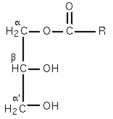
Molecular structure of Monoglyceride

A monoglyceride, more correctly known as a monoacylglycerol, is a glyceride consisting of one fatty acid chain covalently bonded to a glycerol molecule through an ester linkage. 


In addition to being used as food additives, monoglycerides also are employed as polymer additives. Therefore, the need for more efficient methods of monoglyceride preparation is obvious. Their consumption in Europe exceeds 20,000 tons per annum. 

The 2009-2014 Outlook for Monoglycerides in the United States

Monoglycerides of a purity lower than 90% are derived either from the catalytic transesterification of glycerol with triacytglycerols or from the direct esterification of free fatty acids with glycerol. 

For the industrial preparation of monoglycerides of purity higher than 90%, synthesized monoglycerides undergo molecular distillation, a process which increases their manufacturing cost.

Need to know more? Search for related books at Google Books.
Submit Your Site to Best of the Web!

March 31, 2011

Precursors and Industrial Preparation of Polysiloxanes


Surface Phases on Silicon: Preparation, Structures, and Properties 
Functional silanes of the general formula R4-nSiXn, where X is Cl, -OR, -OC(O)R, -NR2 or other groups that are easily hydrolysed, are the monomers of the polysiloxane synthesis. The most common precursor of polydimethylsiloxane is Me2SiCl2 (DDS). 

Since the organosilicon compounds do not appear in nature, all the polysiloxane monomers are obtained on a synthetic route. The natural source of silicon is silica (SiO2). The synthesis of organosilicon compounds is commonly realized in two steps. Firstly, the silica is reduced to elemental silicon by the carbothermal method. Silicon is then transformed into organosilicon species, most often on one of the following routes:


1.      Reaction of an organic compound with silicon at elevated temperature. This is the industrial route to methylchlorosilanes, called the "Direct Process". 
The reaction mechanism:
xMeCl + Si → Me3SiCl, Me2SiCl2, MeSiCl3, other products

2.      Chlorination of silicon and a subsequent substitution of some chlorine atoms by organics group with organometallic reagents, such as organolithium compounds, Grigmard reagents, organic zinc compounds and others.

3.      Transformation of organosilicon into  silyl halides and a subsequent addition to multiple bonds in a hydrosilylation process.


Silicon industry is mostly based on dimethyldichlorosilane (DDS), which is exclusively obtained in the Direct Process, involving the reaction of gaseous methyl chloride with a contact mass of silicon containing copper as catalyst in continuously operating reactors equipped with fluidized- or stir-bed at 200-350 °C.


Save hours of researching, check out these reliable good books: 
Silicon in Organic, Organometallic and Polymer Chemistry  
Organosilicon Chemistry VI: From Molecules to Materials (v. 6)


Need to know more? Search for related books at Google Books.


Submit Your Site to Best of the Web!